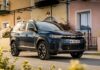
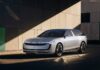
Norwegian Auto Market in 2026 reports initial dip. January sales dropped 77%, with leaders Volkswagen and Toyota reporting sharp losses. While Tesla left the podium, Skoda emerged as a top 3 contender while expanding its EV share as the segment now constitutes the vast majority of the country’s automotive sales.
Economic Environment
Norway’s government has slightly lowered its economic growth expectations for 2026 as it begins drafting the next fiscal budget. The forecast for mainland (non-oil) economic activity was reduced from earlier expectations, reflecting a more cautious outlook for domestic growth. Officials highlighted that geopolitical tensions in the Middle East are adding uncertainty to the global economy, which could weaken demand for Norwegian exports. At the same time, higher energy prices may increase national revenues, though financial market volatility could reduce the value of the country’s sovereign wealth fund.
As part of its latest economic assessment, Norway’s Labour government also updated its medium-term outlook while preparing future spending plans. Although near-term growth expectations were trimmed, projections for the following year were revised slightly upward, suggesting a modest improvement in momentum beyond 2026. Finance Minister Jens Stoltenberg noted that the duration and scale of the Middle East conflict will play an important role in shaping global economic conditions. If international growth slows, Norway’s export sector could face pressure despite the continued importance of oil and gas in supporting the economy.
Automotive Industry Trend and Outlook
As a consequence of new VAT regulations entering into force in 2026, many car sales were anticipated in November and December, resulting in a decline in January figures. In particular, January sales fell by 77% to 2,099 units. Still, the market is expected to stabilize in the upcoming months.
Brand-wise, Volkswagen secured leadership with a share of 21% (-76.8%) in front of Toyota in 2nd with 14.1% (-78.2%) and Skoda -up 7 spots- in 3rd (-56.8%).
Mercedes -up 3 spots- ranked 4th (-80.3%) followed by Hyundai -up 6 spots- in 5th (-66.1%), Tesla -down 3 spots- in 6th (-88%), and Volvo -down 1 spot- in 7th (-84.4%).
MG -up 8 spots- ranked in 8th (-43.2%), reporting the same amount of sales as new contender Deepal and Nissan -down 3 spots- (-86.5%).
Citroen -up 18 spots- and Polestar -up 5 spots- both ranked 9th with the former growing 231.6% while the latter lost 66.7%. Finally, Ford dropped 1 spot and closed the top 10 (-82.4%).
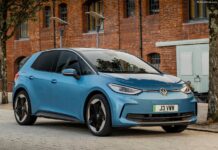
Looking at specific models the Volkswagen ID.3 remained on top of the rankings despite losing 44.3% in year-on-year sales volume, followed by the Toyota bZ4X and the Volkswagen ID.Buzz.
EV Market Trend and Outlook
Norway’s EV market stays on track to complete electric transition, with a smaller and smaller share of sales still being ICE models. Despite the temporary dip in January, the sector is expected to continue to grow past the 90% treshold throughout 2026.
Volkswagen secured top spot with 31.2% of the sector, followed by Toyota in 2nd with 10.3% and by Skoda in 3rd with 7.1%. Notably, Tesla lost its spot on the podium and dropped in 4th.
Medium-Term Market Trend
Norway’s passenger car market expanded steadily from 169,450 units in 2014 to 191,914 in 2017, representing moderate growth over the period. Sales then declined in 2018 and 2019, falling to 177,623 units, largely due to supply disruptions caused by the introduction of the WLTP emissions testing standard. The pandemic had a relatively limited impact on Norway compared with other European markets, with registrations dropping 6.3% to 167,161 units in 2020. The market rebounded strongly in 2021, reaching a decade-high of 205,538 units, before easing slightly in 2022 to 201,240.
Demand weakened significantly in 2023 as high interest rates, inflation, and reduced EV incentives dampened purchases, but the market later stabilized. Total car sales reached 125,288 units in 2024, a modest 0.7% increase, and rose further to 127,768 units in 2025 (+37.9%). Norway has remained a global leader in electric vehicle adoption: EV sales grew from 18,616 units in 2014 and, despite some volatility in recent years, increased 16.4% to 97,310 units in 2024 and a further 4.2% to 101,424 in 2025, representing around 74% of the market and highlighting the country’s strong long-term electrification trend.
Tables with sales figures
In the tables below we report sales for all Brands, top 10 Manufacturers Group and Top 10 models.
This content is for members only.
Login Join Now