Saudi Arabia Vehicle Market in 2026 scales back. Q1 sales dropped by 24.1%, with all top 5 brands reporting losses. Jetour and Haval impressed by defying the headwinds and moving up the rankings.
Economic Environment
Saudi Arabia’s economy grew by 2.8% year-on-year in the first quarter of 2026, slowing from 3.7% a year earlier as the regional conflict with Iran disrupted energy infrastructure and oil shipments through the Strait of Hormuz.
Both oil and non-oil sectors saw weaker growth, with non-oil activity notably dropping from previous levels, while the economy also contracted 1.5% compared to the previous quarter due to a sharp decline in oil output. Despite the slowdown, the country is expected to perform better than some neighboring Gulf economies thanks to alternative export routes and a relatively resilient non-oil sector, though overall growth forecasts for 2026 have been downgraded.
Automotive Industry Trend and Outlook
The Saudi vehicle market is showing sustained struggle in 2026. After dropping 4.4% in January and 9.2% in February, the Q1 tally closed at -24.1% to 167,553 units sold.
Brand-wise, the leader was Toyota, down by 6.8% and with a 31.5% share. Hyundai followed in 2nd, losing 33.8% in year-on-year volume to a 13.2% share.
In 3rd place ranked Kia dropping by 22.8% to 8.3% of the market, followed by Nissan, down by 40.8% to a 6.2% share and Ford with 5.2% (-28.2%).
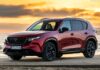
Notably, Jetoru and Haval reported standout gains surging 32.7% into 7th and 56.9% into 8th respectively. Instead, Mazda and Geely were affected the most by the slowdown, dropping 71.5% from 6th into 14th and 84.7% from 8th into 21st.
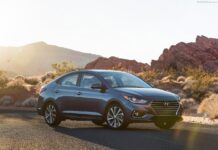
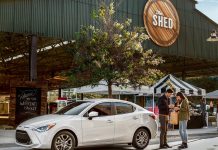
Looking at specific models the Toyota Yaris Sedan surged 8 spots into 1st with a 5.5% share (+61.3%), followed by the Hyundai Accent which lost the top spot but still retained 5.1% (-14.6%).
EV Market Trend and Outlook
Saudi Arabia’s EV growth is affected by the slump, losing 0.4% to a share of 3%. Still, brands like Lucid and BYD are expected to shift their production within the country, hinting that it could become a regional EV hub in the future.
Lucid -up 1 spot- was still the segment leader, retaining a share of 17.5% despite losing 12.5%, followed by BYD -up 9 spots-which grew by 353.3% and Lexus which fell 1 spot (-30.3%).
Medium-Term Market Trend
The Saudi Arabian vehicle market started at 794,557 units in 2014 and peaked at 830,100 in 2015, supported by strong economic growth and consumer confidence. Sales then declined sharply due to subsidy reforms, rising vehicle costs, and economic restructuring, falling to 403,857 units by 2018.
A brief recovery in 2019 was interrupted by the COVID-19 pandemic, which cut sales by 13% to 452,419 units in 2020. The market rebounded strongly, growing 25.9% in 2021 and 7% in 2022 to reach 609,375 units. Momentum continued in 2023, with sales rising 22.8% to 758,791 units, followed by an 8% increase in 2024 to 826,580 units, and further growth to 856,036 units in 2025.
EV adoption remained minimal until 2023, with just 779 units sold, but surged to around 24,092 in 2024 and 23,464 in 2025, marking a turning point in the Kingdom’s mobility landscape. This growth aligns with Vision 2030, which targets 30% EV adoption in Riyadh by 2030. Investments in charging infrastructure, including 5,000 fast chargers, along with local manufacturing initiatives such as Ceer Motors and partnerships with Lucid and Hyundai, are expanding availability. Rising environmental awareness is also strengthening demand, positioning Saudi Arabia as an emerging player in the global EV market.
Tables with sales figures
In the tables below we report sales for top 10 brands.
This content is for members only.
Login Join Now