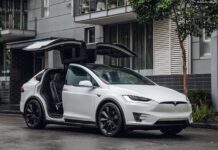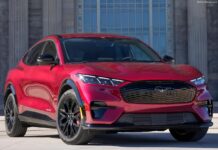

USA Vehicles Market in 2026 is stagnating. YTD sales up to February dropped 3.7%, with Chevrolet and Nissan reporting the largest losses at -10.7% and -30.4%. Tesla dropped 4.8%, causing broader stagnation in the EV segment (-19.1%) where it still holds a major share of 67%.
Economic Environment
The U.S. economic outlook for 2026 points to moderate growth alongside persistent fiscal challenges. Real GDP is projected to expand by about 2.2%, supported by stronger consumer spending and investment, while the labour market remains stable with unemployment around 4.6% before gradually declining. Inflation is expected to ease slightly to about 2.7%, moving closer to the Federal Reserve’s long-term target, and interest rates are set to decline in the near term before stabilising.
However, the fiscal outlook remains a key concern. The federal budget deficit is projected at roughly $1.9 trillion (about 5.8% of GDP) in 2026, with government debt already exceeding 100% of GDP and expected to rise further over time. Government spending is estimated at around 23.3% of GDP, outpacing revenues of about 17.5%, with rising costs from Social Security, Medicare, and interest payments driving long-term pressures.
Automotive Industry Trend and Outlook
The US vehicle market is undergoing a negative phase in 2026. In particular, YTD sales up to February dropped 3.7% to 2,31 million units.
Brand-wise, Toyota secured leadership with 13.2% of the market (+5.1%), followed by Ford in 2nd with 11.6% (-6.1%) and Chevrolet in 3rd with 11.2% (-10.7%).
Honda ranked 4th (+0.6%), in front of Kia -up 1 spot- in 5th (+8.5%), Hyundai -up 1 spot- in 6th (+4.1%), Nissan -down 2 spots- in 7th (-30.4%) and GMC in 8th (+3.8%).
Subaru ranked 9th (-8.6%) while Jeep closed the top 10 (-9.8%).
Looking at the best-selling models, reported in the dedicated article, the Ford F-Series was still the best seller despite losing 17.2% in year-on-year volume, followed by the Chevrolet Silverado in 2nd (+7%).
EV Market Trend and Outlook
The US EV market is struggling in 2026, dropping by 19.1% to a 5.2% share of the total. The segment is still adjusting to the end fo federal EV tax credits, causing larger automakers to scale back on investment in the country.
Still, despite the drop, companies like ChargePoint and EVgo are expanding rapidly, driven by the cumulative number of EVs on U.S. roads. Moreover, surging gas prices following the Iran conflict are reigniting consumer interest in EVs, especially amogn pickup and SUV drivers facing higher fuel costs. As online searches for popular EVs nearly doubled after the price spike, this suggest that the segment could rebound in 2026 as new automakers find a way into the market.
Tesla retained 1st spot with a 67% share despite falling 4.8%. Rivian rose 4 spots into 2nd (+32.6%) while Toyota grew 52.8% and 6 spots into 3rd.
Medium-Term Market Trend
After the 2008 financial crisis, U.S. vehicle sales fell from nearly 18 million to 10.4 million in 2009, before recovering steadily to 16.5 million by 2014 and reaching a decade high of 17.5 million in 2017, supported by stable fuel prices and improved consumer confidence. Sales stabilized over the next two years, but the pandemic in 2020 caused widespread shutdowns of manufacturing plants and dealerships, leading to a 14% drop to 14.7 million units.
Recovery in 2021 was modest, constrained by semiconductor shortages, though government incentives supporting electrification aided automakers such as Tesla. Sales rebounded further to 15.41 million in 2023 (+12.4%) and continued into 2024 with 15,948,991 units (+3.5%) and 16,289,448 in 2025 (+2.1%).
The EV segment experienced dramatic growth over the decade, expanding roughly 766.9% from 109,567 units in 2014 to 430,592 in 2021. A 71.5% surge in 2022 reflected rising environmental awareness, improved battery technology, and expanded charging infrastructure. By 2024, EV sales reached 1,067,035 units (+1.9%) before declining to 930,490 in 2025 (-12.8%), as the market matured and government incentives were rolled back.
Tables with sales figures
In the tables below we report sales for all Brands, top 10 Manufacturers Groups, and top 10 Models.